Thirsty for information about Alaska Real Estate? Whether you're a home buyer, seller, investor, or just curious, we've got you covered! Comments and questions are welcomed!

Nov. 24, 2026

Alaska Well Logs & Septic Records: How to Look Them Up

Wells & Septic

Alaska Well Logs & Septic Records:How to Look Them Up

Out in the Mat-Su Valley and on the Kenai Peninsula, plenty of homes come with their own water and their own wastewater system. The paperwork behind them lives in a few different public databases, and most of them want a legal description, not a street address. Here’s where each record lives and how to find it.

By the HERO Realty Group team | November 2026
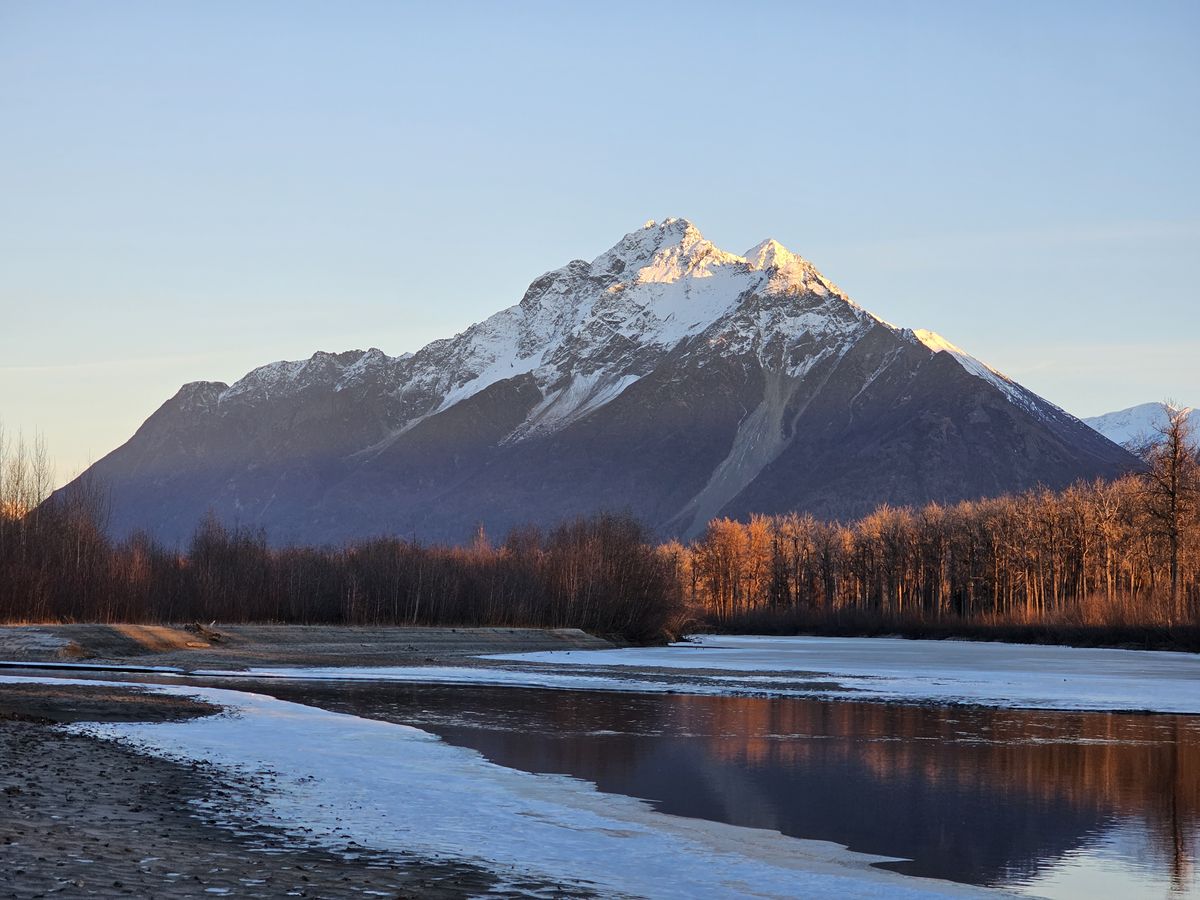
Snow-capped peak above the Matanuska River at sunset in the Mat-Su Valley, Alaska

Buying a place with a well and septic? Selling one? Either way, someone is going to ask, “Do you have the well log and the septic paperwork?” This guide walks through the state well log database, the state septic records system, Anchorage’s separate system, and the lines on the Alaska seller disclosure form that ask about all of it.

2State databases: DNR for well logs, DEC for septic
45 daysFor drillers to file a well log after completion
Lot & blockDEC septic records are filed by legal description
5–10 daysTypical DEC reply time for a staff records search
$25DEC retrieval fee when staff search for you
1998Year Anchorage began requiring a COSA to transfer title

Quick takeaway: Well logs live in the Alaska DNR Well Log Tracking System (WELTS). Septic records for the Mat-Su Valley, the Kenai Peninsula and most of the state live in Alaska DEC’s EDMS database. Inside the Municipality of Anchorage, single-family and duplex septic records are kept by the Municipality instead. Start every search with the legal description, not the street address.

1

Where Each Record Lives

Think of it like a junk drawer split across three kitchens. Each office keeps its own piece, and they don’t copy each other.

Who keeps what

For a private well and an on-site septic system serving a home.

Record Who keeps it How to search
Well log Alaska DNR, WELTS (statewide) Subdivision, parcel description, owner, driller, borough, map and more
Septic: Mat-Su Valley, Kenai Peninsula Alaska DEC, EDMS Legal description (subdivision, lot, block); not mailing address
Anchorage wells and septic MOA On-Site Water and Wastewater Subdivision name, block and lot
What the seller knows The seller, on the state disclosure form Asking the seller, before you write an offer

DEC says the Municipality of Anchorage and Valdez keep their own on-site wastewater records for single-family and duplex homes, and EDMS doesn’t duplicate them. Sources: Alaska DNR WELTS; Alaska DEC, Onsite Wastewater Systems in Real Estate Transactions; MOA Owner & Buyer FAQ.

3

How to Look Up an Alaska Well Log (WELTS)

The Well Log Tracking System (WELTS) is the state repository for water well logs, run by the Alaska DNR Division of Mining, Land and Water. State law and regulation (AS 41.08.020(b)(4) and 11 AAC 93.140(a)) require water well contractors to file well data, including the driller’s log, pumping tests and flow measurements, within 45 days of completing a well.

  1. Open WELTS and pick a field from the Search By menu. The choices include Owner Name, Driller Name, Date, Parcel Description, Subdivision Name, MTRS (township and range), REAA/Borough, City, Log ID and Map.
  2. Type your search and click Search. Subdivision Name is a good place to start. Results list the Log ID, driller, date of completion, owner, region and parcel description.
  3. Narrow things down with the Filter box (try the lot number), or tick Includes Pump Test. You can also print or export the list to Excel.
  4. Click the Log ID. The record has tabs for Owner Info, Driller Info, Location Info, Well Data and Borehole Data, plus a Well Log button that opens the filed log as a PDF.

On the Well Data and Borehole Data tabs you’ll typically see things like depth of hole, casing, static water depth, pumping level and yield, and what the driller hit on the way down (“wet sandy gravel” is the kind of thing that makes a well driller smile).

Real-life tip: In the results we pulled, the “owner” on many logs was a builder or an earlier owner, not today’s seller. If an owner-name search comes up empty, search by subdivision and filter by lot.

  • Know the limits: DNR says it makes no representation about well location, completeness or accuracy, and the data are provisional. Older logs may show “Not Available” for fields that were never entered.
  • A well log isn’t a water test: It records how the well was built. Water quality is a separate question, and the sample log we pulled for this guide simply said water quality was not tested. WELTS links to DEC’s private well page for well owners.
  • No log found? Older wells may never have been filed, or may be filed under a different description. That’s a question for the seller and the disclosure form.
4

How to Find Septic Records with Alaska DEC (EDMS)

Outside Anchorage and Valdez, the Alaska Department of Environmental Conservation (DEC) keeps on-site wastewater records in its Environmental Data Management System (EDMS). You don’t need an account to look up records. DEC documents a system in one of two ways:

  • Documentation of Construction: Completed and submitted by an engineer, a Certified Installer or an Approved Homeowner. Once DEC records it, it appears in EDMS.
  • Approval to Operate: For systems designed by an engineer and reviewed by DEC.

DEC has used other forms over the years, and says that if it issued a document for a system, a copy of what was issued at the time will be in EDMS. Here are DEC’s own search steps:

  1. For older records, turn on Show sites with no locations. Older submissions are filed only by legal description and don’t show on the map by default. On a phone or small screen, DEC says to click the eyeball icon.
  2. Click Search by Installer/Facility Name/Legal Description. Choosing your area office helps limit results, but it’s optional.
  3. Type as little as possible in the Legal Desc box, like just the subdivision name. Don’t press Enter, which DEC says will likely return “No Results Found.”
  4. Click Search.

Found it? DEC’s Buying a Home page says the record should tell you three things:

  • Age: DEC says a properly designed, installed and maintained system can treat household wastewater for up to 20 years or more, so check whether it’s near the end of that span.
  • Size: DEC lists adequate tank size as 1,000 gallons for a home with up to three bedrooms, plus 250 gallons for each additional bedroom.
  • Location: Where the tank and drain field sit relative to wells, other septic systems, slopes, drainage and lot lines.

Since 2022, new submissions should also be filed with latitude and longitude, physical address and sometimes the local government’s property ID, so newer systems are easier to find.

Nothing came up? Try older legal descriptions from the plat history. If that fails, DEC says a paper file may exist at the regional office: ask for a paper document search and bring a list of possible past descriptions. DEC’s real estate page lists a $25 retrieval fee when staff search for you, with replies in 5–10 working days depending on workload. DEC also notes that paper records from Wasilla are being sent out for scanning, so retrieval may take up to two weeks.

A few things DEC flags that catch buyers and sellers off guard:

  • No document at all: If the sale depends on DEC documentation (DEC says this is typically a lender requirement), the usual path is hiring an engineer to inspect the system and submit a report. DEC doesn’t recommend engineers, and it says a complete engineering plan takes about 30 days to review.
  • Bedrooms don’t match: Residential systems are usually sized by bedroom count. DEC can’t change the number of bedrooms on an existing document; the owner either asks the original designer to certify the system for more bedrooms or hires an engineer to assess it.
  • “It works fine” isn’t paperwork: In DEC’s words, “Evidence that the toilets flush is not evidence the on-site wastewater system is operating properly.” Fair enough.
  • Lot lines moved: With septic, the land is part of the system. If the legal description changed, DEC has a change of legal description form for some cases and requires an engineer’s report in others.
5

Mat-Su Valley and Kenai Peninsula: Who Does What

For a home on a private well and septic in Wasilla, Palmer, Big Lake, Soldotna, Kenai or the areas around them, the state systems above are the place to look. DEC’s EDMS covers on-site wastewater records statewide except the Anchorage and Valdez single-family and duplex records.

  • Septic is a state program: The Mat-Su Borough’s own Water and Wastewater Advisory Board said in a May 2026 resolution that the State of Alaska has always kept primacy over regulating and enforcing septic systems.
  • Local DEC offices: DEC’s area office list assigns Mat-Su communities like Wasilla, Palmer, Big Lake and Willow to its Mat-Su Area Office in Wasilla, and Kenai Peninsula communities like Kenai, Soldotna, Kasilof, Homer and Seward to its Soldotna Area Office. Those are the offices to ask about paper files.
  • Wells: WELTS covers the whole state. You can search by REAA/Borough, and the results show the region, like Matanuska-Susitna Borough.
  • The boroughs help with step one: Their property search sites are the quickest way to get the legal description you need for everything else.

Shopping for raw land instead? A lot with no well or septic yet has nothing to look up. DEC says not every site can support a conventional septic system, and an engineer or Certified Installer can evaluate that. Our Alaska land page and cost to build guide cover the bigger picture.

6

Anchorage Plays by Its Own Rules

Inside the Municipality of Anchorage, which includes Eagle River, Chugiak and Girdwood, the On-Site Water and Wastewater Section keeps its own well and septic files.

  • The database: Open the MOA’s on-site document database and you’ll see folders by letter. Pick the letter of the subdivision, then the subdivision, then the block, then the lot. The Municipality’s own example: RABBIT CREEK VIEW & HEIGHTS BLK 11H LT 10A lives under “R.”
  • The COSA: Anchorage code requires a Certificate of On-Site Systems Approval before ownership transfers on a home with a well or septic system, and the seller is responsible for getting it.
  • Questions: The On-Site Section’s number is 907-343-7904.

We already wrote up the Anchorage side in detail, including what a COSA covers and what buyers and sellers should ask, in our Anchorage Well and Septic Guide.

7

What the Alaska Seller Disclosure Form Asks

Alaska law (AS 34.70.010) requires the seller of residential property to give the buyer a completed disclosure statement before the buyer makes a written offer. The current Real Estate Commission form is 08-4229 (Rev. 05/2024), and well and septic show up in three places:

  • Part II, Documentation: A checklist of documents the seller has available for review, including Well Log & Water Tests, Shared Well Agreement, Shared Septic Agreement, Soil Tests and As-Built Survey.
  • Sewer System: Public, private or community; holding tank or septic tank; drain field type (bed, crib, mound, pit, trench); whether it has failed during the seller’s ownership; work, maintenance or inspections; the approval or certification source and date; and any abandoned systems.
  • Water Supply: Well depth and flow rate (gallons per minute) with the date tested, abandoned wells, supply problems, known contaminants (the form names E. coli, nitrates, heavy metals and arsenic), well or pump failures, shared water and water rights.

Sellers, pull your records before you list. DEC’s advice to real estate folks is to begin early and search for on-site wastewater documents while preparing to list, not after a contract is signed, because an engineering review can take 30 days or more. Checking “Well Log & Water Tests” on the form is a lot easier when the log is already sitting in your folder.

8

Quick Checklist for Buyers and Sellers

  • Find the legal description (borough property search, deed or disclosure form).
  • Search WELTS for the well log by subdivision, then filter by lot.
  • Search DEC’s EDMS by legal description, with “Show sites with no locations” turned on. In Anchorage, use the MOA on-site database instead.
  • Compare what you find with the house today: bedroom count, additions, and where the well and drain field actually sit.
  • No record? Check older legal descriptions, then ask the local DEC office for a paper search.
  • Read the Sewer System and Water Supply sections of the seller disclosure, and ask what “Well Log & Water Tests” are available.
  • Remember the records tell you what was filed, not how the system is doing today. Inspections and water testing are a separate step.
?

Alaska Well Log and Septic Records FAQ

How do I find a well log for a property in Alaska?

Search the Alaska DNR Well Log Tracking System (WELTS). You can search by subdivision name, parcel description, owner, driller, township and range, borough, city or map, then open the Log ID to see the well data and the filed well log.

Can I look up septic records by address in Alaska?

Usually not. Alaska DEC files on-site wastewater records by legal description, such as subdivision, lot and block, and says its records cannot be searched by mailing address. Newer submissions since 2022 should include more location details.

Where are septic records for Wasilla, Palmer and Soldotna?

Outside Anchorage and Valdez, septic records are kept by Alaska DEC in its EDMS database. If nothing shows up online, your local DEC office can do a paper file search.

Does Anchorage use the DEC septic database?

Not for single-family and duplex homes. The Municipality of Anchorage keeps its own on-site water and wastewater records, searchable by subdivision, block and lot, and requires a COSA before title transfer on homes with a well or septic system.

Does the Alaska seller disclosure form ask about wells and septic?

Yes. Form 08-4229 lists Well Log and Water Tests among the documents a seller can provide, and has Sewer System and Water Supply sections covering system type, well depth and flow rate, failures, contaminants and abandoned wells or systems.

HERO Realty Group, Keller Williams Realty Alaska Group

Looking at a home with a well and septic?

Records searches are a lot less fun at 11 p.m. the night before an inspection deadline. If you’d like help pulling the paperwork together for a home you’re buying or selling, reach out to the team. No pressure.

Prefer to talk? Call or text 907-360-7448.

Sources: Alaska DNR, Well Log Tracking System (WELTS) · WELTS User’s Guide · DNR Water Data & Reporting · Alaska DEC, Onsite Wastewater Systems in Real Estate Transactions · Alaska DEC, Engineering Support and Plan Review · Alaska DEC, EDMS · Alaska DEC, Buying a Home · Alaska DEC, Area Offices · MOA Owner & Buyer FAQ · MOA Wells & Septic · MOA COSA · Alaska Real Estate Commission, Residential Real Property Transfer Disclosure Statement 08-4229 · MSB Water and Wastewater Advisory Board Resolution 26-03 · MSB Property Search · KPB Assessing Property Search · DNR Recorder’s Office

Data note: Search steps, screen names and fees were checked against the official sites above in November 2026, and online systems change, so confirm with the agency before you rely on a deadline or fee. Record searches show what was filed with an agency, not the current condition of a well or septic system. This is general information, not legal, engineering or environmental advice. Photo: iStock.com/Darren W Essman. Equal Housing Opportunity.
Posted in Education
Nov. 21, 2026

Anchorage Property Tax 2026: Rates, Exemptions, Appeals

Property Taxes

Anchorage Property Tax 2026:Rates, Exemptions, Appeals

Every Anchorage property tax bill comes down to one short formula. The hard part is knowing which numbers go into it: your tax district’s mill rate, the exemptions you’ve actually applied for, and the value on that green postcard in January. Here they are in plain English, straight from the Municipality.

By the HERO Realty Group team | November 2026

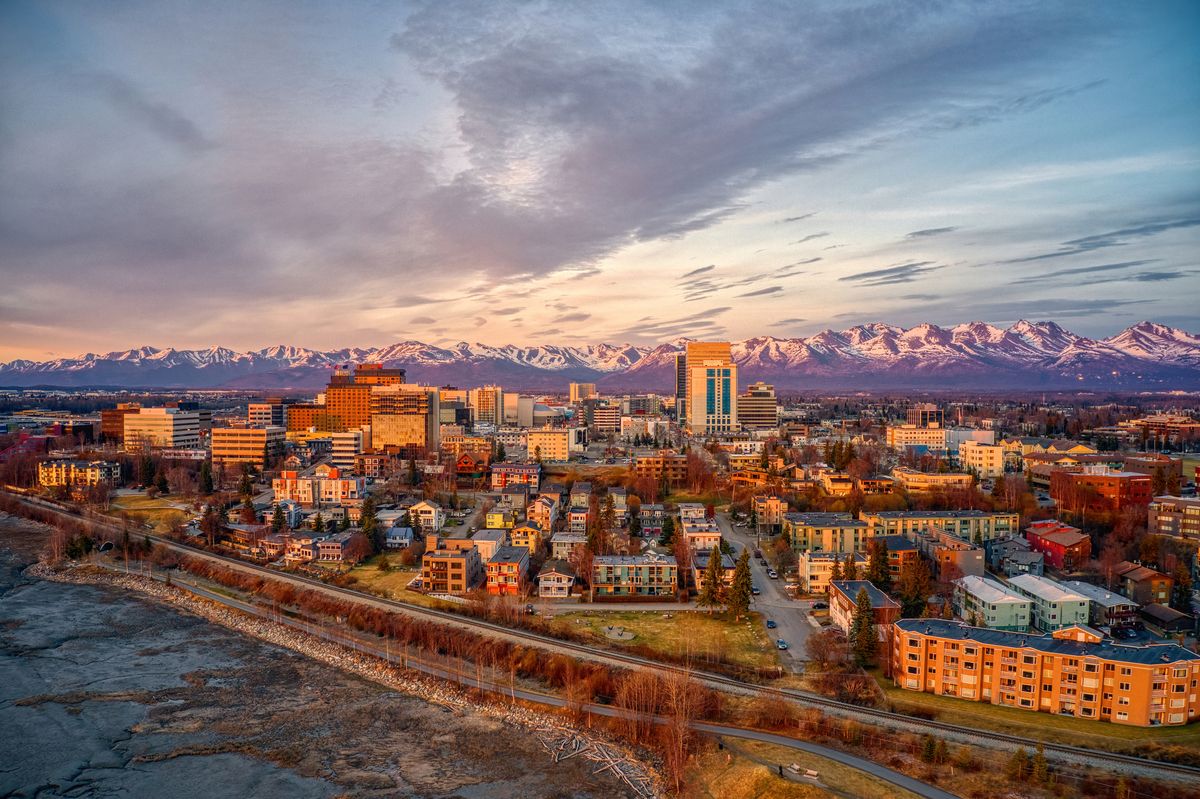
Aerial view of downtown Anchorage, Alaska, at sunset with the Chugach Mountains behind

Whether you’re buying your first Anchorage home, moving up from out of state or just opened this year’s bill and said a word we can’t print, this guide covers the 2026 mill rates by area, the exemptions most homeowners can use, the due dates and how a value appeal works.

15.572026 total mills, City/Anchorage tax district
8.972026 average general government mills
6.32School district mills, same in every district
$75,000Most the residential exemption can remove
$150,000Senior or disabled veteran exemption
30 daysTo appeal after your value notice is mailed

Quick takeaway: Your tax = (assessed value minus exemptions) ÷ 1,000 × your district’s mill rate. Where the home sits inside the Municipality sets the rate, exemptions must be applied for by March 15, and appeals are about the value, not the tax.

1

How Your Anchorage Tax Bill Is Calculated

“Mill” sounds like something from a gold-rush flour company, but it’s just a unit: 1 mill = $1 of tax for every $1,000 of taxable value. So 15.57 mills works out to $1,557 for each $100,000 of taxable value.

  • Assessed value: The Municipality’s estimate of your property’s market value as of January 1, land plus buildings.
  • Taxable value: Assessed value minus any exemptions you qualify for and have applied for.
  • Mill rate: The total for your tax district, which is a bundle of smaller levies for the services your area pays into, plus the school district levy.

The Municipality’s own example: a taxable value of $437,500 at 16.145 mills is $437,500 ÷ 1,000 × 16.145 = $7,063.45.

2

2026 Mill Rates by Tax District

The Municipality lists more than 50 tax districts. The total rate depends on which service areas a district pays into: Anchorage fire, police, parks, roads and drainage, Girdwood’s own service area, Eagle River’s rural road service area and so on. Here are some of the common ones:

Total 2026 mill rate, school levy included

Tax on each $100,000 of taxable value, before exemptions.

Tax district Mills Per $100K
City/Anchorage (1) 15.57 $1,557
Spenard (3) 15.57 $1,557
Eagle River (10) 15.76 $1,576
Chugiak Fire Service Area (22) 14.49 $1,449
Hillside (2) 13.33 $1,333
Girdwood Valley (4) 12.08 $1,208

Every district includes the 6.32-mill Anchorage School District levy. Some neighborhoods are also in a limited road service area, which adds 0.34 to 2.50 mills on the 2026 table. Source: Municipality of Anchorage 2026 Mill Levy Table.

Why the spread? Mostly services. For example, the Hillside district doesn’t pay the 2.24-mill Anchorage Roads and Drainage levy that City/Anchorage does, and Girdwood pays its own 5.34-mill Girdwood Valley Service Area levy instead of the Anchorage fire and police levies. Eagle River and Chugiak have several districts of their own, so two homes a few miles apart can land on different rates.

Across the whole Municipality, the 2026 average general government rate is 8.97 mills (about $897 per $100,000), down from 9.13 in 2025. Add the school levy and the 2026 total average is 15.29 mills, down from 15.45.

Find your district: It’s printed on your tax bill, and the Municipality’s property search and tax district maps show it for any parcel. Shopping for a home? Ask for the parcel’s current tax bill along with the listing details.

3

A $400,000 Home, Worked Out

Same house, same assessed value of $400,000, dropped into different tax districts. The right column assumes the owner lives there and has the residential exemption, which takes $75,000 off the taxable value.

Yearly tax on a $400,000 assessed value

2026 total mill rates. Math only, not a tax bill.

Tax district With exemption No exemption
City/Anchorage $5,060 $6,228
Eagle River $5,122 $6,304
Chugiak Fire SA $4,709 $5,796
Hillside $4,332 $5,332
Girdwood Valley $3,926 $4,832

Rounded to the dollar. With the exemption, taxable value is $325,000. City/Anchorage example: $325,000 ÷ 1,000 × 15.57 = $5,060.25.

For a closer-to-real number: the median Anchorage single-family home in the Alaska MLS sold for $488,000 over the past year (2,241 sales, Municipality of Anchorage, including Eagle River, Chugiak and Girdwood). If a home were assessed at exactly that, in the City/Anchorage district with the residential exemption, the tax would be about $6,430 a year, roughly $536 a month. Assessed values and sale prices aren’t the same thing, so use the actual assessment when you can.

Want to see how that fits into a monthly payment? Plug the tax into our Alaska mortgage calculator. If your lender escrows taxes, this is the number that quietly rides along with principal and interest.

4

Anchorage Property Tax Exemptions

Exemptions take value off the top before the mill rate is applied. They are not automatic: you apply, and the application must be received, submitted online or postmarked by March 15 of the tax year.

  • Residential (owner-occupied) exemption: 40% of assessed value, up to $75,000. Any home assessed at $187,500 or more gets the full $75,000. To qualify, you own and live in the home as your primary residence as of January 1, and on your first application you must have been an Alaska resident for the entire prior year. At the City/Anchorage rate, $75,000 off is worth $1,167.75 a year.
  • Senior citizen exemption: Up to $150,000 of assessed value for an owner-occupied primary residence of a resident who turned 65 before January 1, or a widow or widower at least 60 years old of someone who qualified. State law (AS 29.45.030(e)) requires every Alaska municipality to offer it.
  • Disabled veteran exemption: Up to $150,000 for a resident veteran with a service-connected disability rated at 50% or more (a current VA benefits letter is required), or a widow or widower at least 60 years old of someone who qualified.
  • Using both: Anchorage code allows the residential exemption to be combined, in whole or in part, with the senior or disabled veteran exemption, and applying for the senior or veteran exemption automatically files a residential application too. Ask Property Appraisal how the two apply to your home.
  • Others: The Municipality also lists a military service widow or widower exemption (up to $150,000), a farm use land exemption and disaster relief for homes at least 50% destroyed by fire.

Just bought or just moved here? Exemptions don’t transfer from your old house, so apply for the new one. Because you have to own and live in the home on January 1, a home bought partway through 2026 would be eligible starting with 2027 at the earliest, with the application due March 15, 2027. If you moved to Alaska partway through a year, ask Property Appraisal when you first qualify.

Once approved, you don’t need to reapply each year unless something changes, like ownership, residency or how the home is used. If it does, you have to tell the assessor.

5

Key Dates and Due Dates

The Anchorage property tax year runs on a predictable loop. Put these on the fridge (or in your phone, if the fridge is already full of school art):

  • January 1: Valuation date. Your assessment reflects the property as of this day.
  • By January 15: Valuation notices (the green postcards) are mailed.
  • 30 days later: Appeal deadline. The exact date is printed on your notice.
  • March 15: Exemption applications due.
  • By June 1: Tax bills mailed, with coupons for both halves.
  • June 30: Full payment or first half due. A late penalty applies starting July 8.
  • August 31: Second half due. A late penalty applies starting September 8.

You get one bill for the year with both payment coupons, and no separate reminder for the second half. If a bill doesn’t show up, it’s still on the owner to contact the Municipal Tax Office. Late payments carry a 10% penalty plus interest at 10% a year.

6

How to Appeal Your Assessment

First, the ground rule: you can appeal your property’s value, not the tax. The mill rate, the dollar amount of the bill and how much it changed from last year can’t be considered. “My bill went up and I’m grumpy” is very relatable, but it isn’t evidence.

  • Check the notice first: The 30 days after mailing are also a review period. Look over your property record and call Property Appraisal about errors. Many issues get fixed here.
  • File on time: A written appeal form plus a refundable filing deposit, received or postmarked by the “Appeal must be filed by” date on the notice. For 2026, that date was February 11, 2026.
  • Bring evidence: All supporting evidence is due within 45 days of the notice mailing (the 30 days plus 15 more). For homes, the Municipality says the best evidence is the sale price of your property and of similar properties. Appeals without supporting information are dismissed.
  • Work it with an appraiser: An appraiser reviews your case and may recommend a value. The Municipality says about 75% of appeals are resolved by signing that recommendation.
  • Board of Equalization: If it isn’t resolved, Board of Equalization hearings start in April and must be substantially complete by June 1.
  • Keep paying: Taxes are still due on time while an appeal is pending. If your value goes down, the Municipality refunds the excess with interest.

Appeal filing deposit

Refunded if the appeal is resolved before a hearing, or if you show up and take part in the hearing after providing the required information and access.

Assessed value Deposit
$1 – $99,999 $30
$100,000 – $499,999 $100
$500,000 – $1,999,999 $200
$2,000,000 or more $1,000

For 2027: The Municipality says valuation notices are mailed by January 15, and the appeal deadline is 30 days from the mailing date, printed on each notice. Exemption applications for 2027 are due March 15, 2027. Curious whether your value is in the ballpark? Recent nearby sales are a good gut check, and our Anchorage home value page is a quick place to start.

?

Anchorage Property Tax FAQ

What is the Anchorage property tax rate in 2026?

It depends on your tax district. The City/Anchorage district is 15.57 mills ($1,557 per $100,000 of taxable value), Eagle River is 15.76, Hillside is 13.33 and Girdwood Valley is 12.08. The Municipality-wide average general government rate is 8.97 mills, plus 6.32 mills for the school district.

When are Anchorage property taxes due?

Bills are mailed by June 1. Pay in full or the first half by June 30, and the second half by August 31. Penalties start July 8 and September 8.

How much is the senior property tax exemption in Anchorage?

Up to $150,000 of assessed value for a resident 65 or older (by January 1) who owns and lives in the home as a primary residence. The disabled veteran exemption is also up to $150,000. Apply by March 15.

Can I appeal my Anchorage property taxes?

You can appeal the assessed value, not the tax or the mill rate. File within 30 days of the valuation notice mailing date, by the deadline printed on the notice, and send your evidence within 45 days.

Do I have to reapply for the residential exemption every year?

No, as long as nothing changes with ownership, residency or use. It doesn’t transfer to a new home, though, so apply again after you move.

HERO Realty Group, Keller Williams Realty Alaska Group

Figuring taxes into an Anchorage move?

Property taxes are part of the monthly picture, right next to the mortgage and insurance. If you’d like help comparing homes in different tax districts, reach out to the team. No pressure.

Prefer to talk? Call or text 907-360-7448.

Sources: MOA 2026 Mill Levy by Tax District · MOA 2026 Revised Budget, Taxes (average rates) · MOA Real Estate Property Taxes · MOA Dates for Property Taxation · MOA Read Your Tax Bill · MOA Property Appraisal, Exemptions · MOA 2027 Residential Exemption application · MOA 2027 Senior Exemption application · MOA 2027 Disabled Veteran Exemption application · MOA FAQ About Appeals · MOA Property Appraisal · Anchorage Municipal Code 12.15 (12.15.015) · AS 29.45.030 · Alaska DCRA, Property Tax Exemptions in Alaska

Data note: Rates are the Municipality of Anchorage’s 2026 levies (AO 2026-43 as amended and AO 2026-44). Tax examples are simple math on round values, not tax bills; actual bills depend on your assessed value, tax district and approved exemptions. The median sold price comes from an Alaska MLS closed-sales export pulled November 10, 2026 (closings November 10, 2025 – November 10, 2026), Residential class, Municipality of Anchorage. Dates and amounts were checked against Municipality pages in November 2026 and can change, so confirm with Property Appraisal (907-343-6770) or the Municipal Tax Office (907-343-6650). This is general information, not tax or legal advice. Photo: iStock.com/Jacob Boomsma. Equal Housing Opportunity.

Posted in Education
Nov. 18, 2026

Cost to Build a House in Alaska: Mat-Su vs Anchorage (2026)

Building in Alaska

Cost to Build a House in Alaska:Mat-Su vs Anchorage (2026)

“How much does it cost to build a house in Alaska?” is one of the most common questions we hear, usually from someone who just found a gorgeous piece of land. The honest answer: the per-square-foot number everyone quotes is only part of the bill. It’s a bit like an airline fare before bags, seats and the $14 sandwich.

By the HERO Realty Group team | November 2026

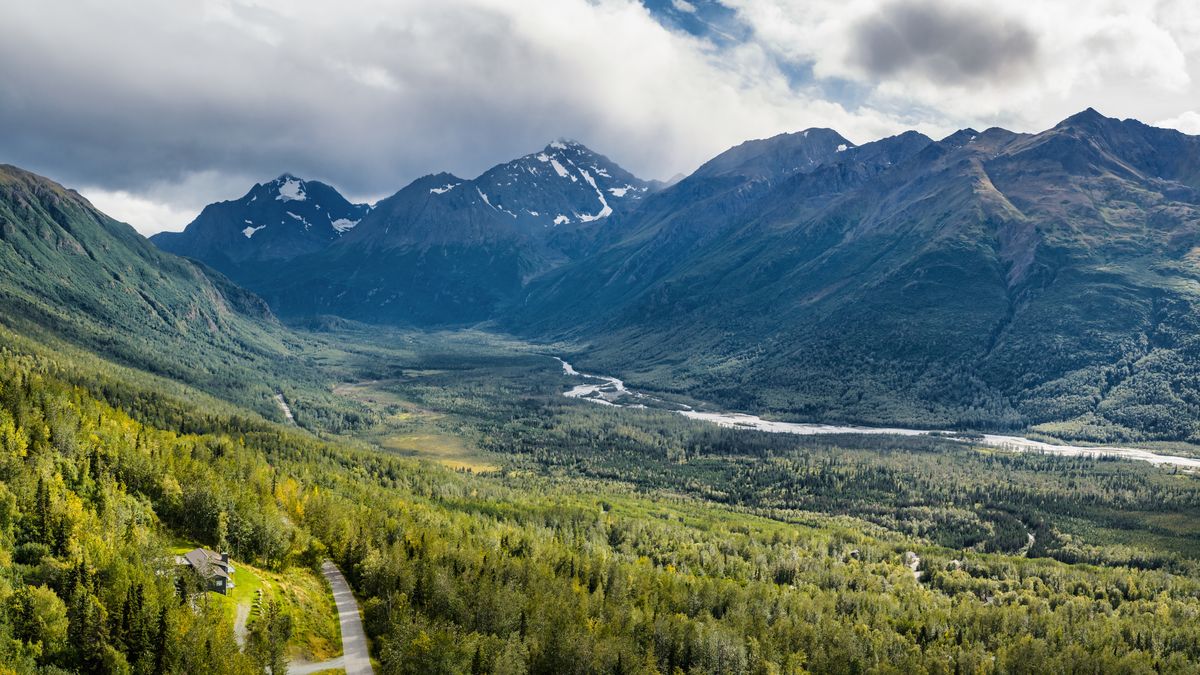
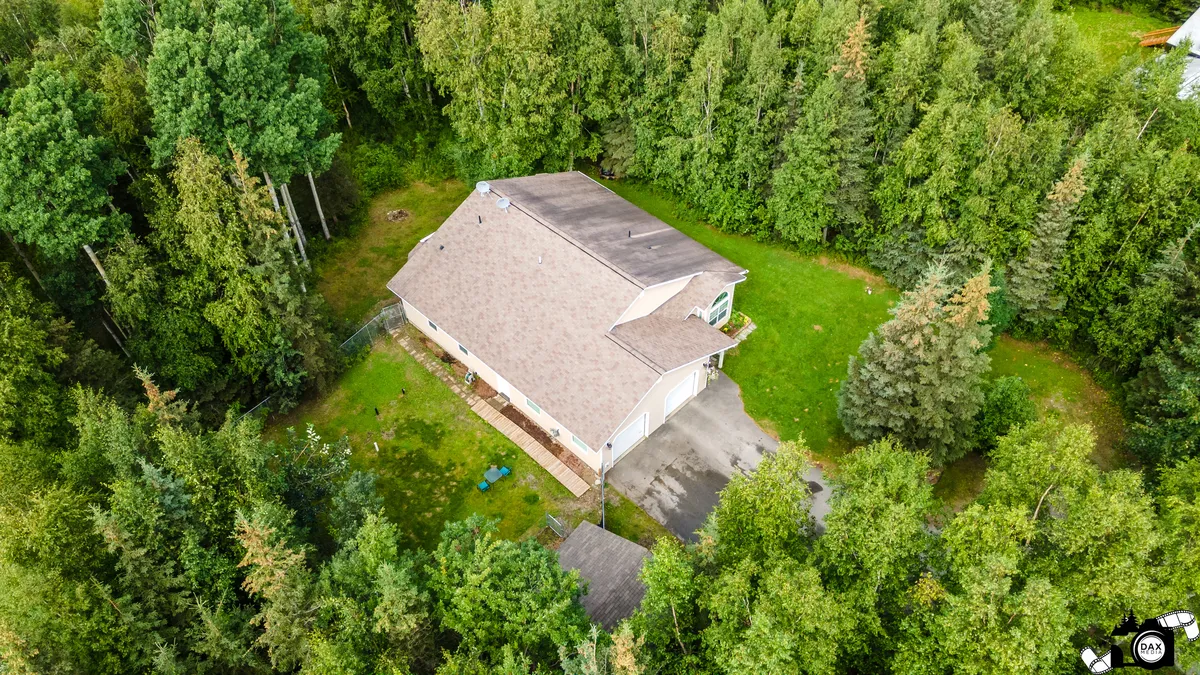
Aerial view of a home on wooded acreage in the Mat-Su Valley, Alaska

Below, we line up what local builders publish, what newly built homes actually sold for in the MLS, and the land, well, septic and permit costs that sit on top, for both the Mat-Su Valley and Anchorage.

$240–$350Builder-quoted cost per sq ft, construction only
$299Mat-Su new homes, median sold price per sq ft
$367Anchorage new homes, median sold price per sq ft
$477,000Mat-Su new homes, median sold price
$80K–$100KTypical 1-acre Mat-Su lot with power and gas (2025 quote)
12–16 moOne custom builder’s design-to-move-in timeline

Quick takeaway: Builder per-square-foot quotes usually cover the house itself. Land, well, septic, driveway, gravel, design fees and garages are often extra, and on a rural lot they can add six figures.

1

What Local Builders Say It Costs per Square Foot

Sources don’t agree, and that’s normal. Each one is describing a different kind of house. Here’s what three published sources say, in their own words:

Published cost per square foot. Ranges are each source’s own figures, not ours.

Source Mat-Su Anchorage
Alaska Home Builder, Feb 2026 (mid-range custom) $240–$320 $260–$350
Falcon Alaska (custom design-build) ~$325 Not split out
Mat-Su broker in Alaska Business, Mar 2025 (new homes on a normal lot) $280–$310 Not given

Alaska Home Builder figures are for Wasilla vs Anchorage. Falcon adds about $160 per sq ft for garages and says most of its homes land between $750,000 and $2.5 million. Sources linked at the bottom.

Why does Anchorage usually run higher? The Anchorage-vs-Wasilla builder page points to labor demand, a more involved permit process and smaller lots that need more precise site work. Mat-Su lots tend to be bigger and cheaper, but they more often need a private well and septic system.

2

What Newly Built Homes Actually Sold For

Builder quotes are one side. The other side is what buyers actually paid for brand-new homes. We pulled every single-family home that closed in the Alaska MLS over the past 12 months and grouped them by the year they were built.

Median sold price per square foot

Single-family homes closed Nov 10, 2025 – Nov 10, 2026. Price includes the lot.

Mat-Su new
299
$299
Mat-Su 2000–24
262
$262
Mat-Su pre-2000
228
$228
Anch. new
367
$367
Anch. 2000–24
280
$280
Anch. pre-2000
254
$254

“New” = year built 2025 or 2026. Sales: Mat-Su new 321, 2000–24 909, pre-2000 560; Anchorage new 61, 2000–24 428, pre-2000 1,752. Anchorage’s new-home sample is small.

$477,000Mat-Su new home median · 1,616 sq ft · 0.92 acre
$778,050Anchorage new home median · 2,222 sq ft · 0.22 acre

Within the Mat-Su Valley, new homes in Palmer sold for a median $318 per square foot (113 sales) and in Wasilla $290 (184 sales). For comparison, all Mat-Su single-family sales, old and new, came in at a median $264 per square foot and $430,000.

What this tells you: A finished new home in the Mat-Su Valley, lot and all, has been selling for about the same per square foot as some builders quote for construction alone. Custom builds with your own plan and finishes usually cost more per foot than the typical new home on the market.

3

The Costs That Aren’t in the Per-Square-Foot Number

This is where budgets get surprised. Most of these apply to a rural Mat-Su lot. An Anchorage lot on city water and sewer skips some of them but often starts with a higher land price.

  • Land: A Mat-Su broker put the average one-acre lot with power and natural gas at $80,000–$100,000 in early 2025. Alaska Home Builder estimates buildable lots at $45,000–$120,000 in Wasilla and $90,000–$200,000+ in Anchorage.
  • Well: Drillers charge by the foot, and Southcentral wells run from under 50 feet to over 600 feet. Falcon puts 2026 drilling at $65–$70 per foot plus about $3,000 for a pump, so a 100-foot well is roughly $9,800 and a 300-foot well about $23,400. Alaska Home Builder estimates $10,000–$25,000. Public well logs show how deep neighbors had to go.
  • Septic: Falcon prices a traditional 3-bedroom gravity system around $15,000, while high groundwater, slow-draining soil, steep slopes or shallow bedrock can call for an engineered system upwards of $50,000. Alaska Home Builder estimates $15,000–$30,000 in rural Wasilla. Septic systems are regulated by the Alaska Department of Environmental Conservation.
  • Gravel and site work: Falcon describes one lot that needed about $100,000 of imported gravel before it was buildable, and another buyer who couldn’t get permanent power to their land.
  • Design and engineering: Plans, engineering, surveys and builder’s risk insurance are fixed costs that don’t shrink with a smaller house, which is one reason small homes cost more per foot.
  • Garage: Usually priced separately, about $160 per sq ft in Falcon’s numbers.
  • Carrying costs: Construction-loan interest and property taxes while you build. Our land loan and home loan guides walk through the financing side.
4

A Rough Mat-Su Example

Here’s a simple illustration using the published ranges above for an 1,800 sq ft home on a one-acre lot. It’s math, not a quote.

Item Low High
House, 1,800 sq ft at $240–$320 $432,000 $576,000
One-acre lot with power and gas $80,000 $100,000
Well plus septic $25,000 $55,000
Subtotal $537,000 $731,000

Before driveway, gravel, design, garage, loan interest and furnishings. Ranges come from the sources in sections 1 and 3.

Put that next to the $477,000 median for a new Mat-Su home that already sold, and you can see why plenty of people price out both paths. Building makes the most sense when the land, layout or features you want simply aren’t on the market.

5

Permits: Mat-Su vs Anchorage

Anchorage: The Municipality issues residential building permits and inspects the work. The building permit fee is 0.9% of the project valuation and plan review is another 0.5% (Anchorage Municipal Code 23.10.109). On a $400,000 valuation, that’s $3,600 plus $2,000, before land-use review and other smaller fees.

Palmer: Inside city limits, the City of Palmer reviews plans and inspects construction. New homes need an approved driveway permit before the building permit.

Elsewhere in the Mat-Su Valley: The Borough notes that neither the State of Alaska nor the Mat-Su Borough has adopted the International Residential Code. That doesn’t mean there are no rules. The Borough requires driveway permits onto Borough roads (state roads go through Alaska DOT&PF), a land use permit to build within 75 feet of a lake or stream, and a flood hazard permit in mapped flood zones. Inside Wasilla or Houston, check with the city first.

Statewide: A contractor building a home needs a state residential contractor endorsement, which includes a cold-climate building course. If you plan to use an Alaska Housing Finance Corporation loan, the home must meet AHFC’s Building Energy Efficiency Standard.

Before you buy land: Walk it with a builder, ask about well depths and septic soils nearby, confirm power and road access, and check the flood map. Our well and septic guide covers what to look for.

vs

Build or Buy? A Quick Gut Check

Building may fit if you have specific land in mind, want a layout or features you can’t find, and can wait. Falcon puts design to move-in at 12–16 months, and Alaska Home Builder puts construction alone at 7–12 months.

Buying may fit if you need to move within a few months or want a firm price on day one. Plenty of newer Mat-Su homes come up for sale, and our mortgage calculator shows what each path looks like as a monthly payment.

HERO Realty Group, Keller Williams Realty Alaska Group

Pricing out land or a newer home?

The HERO Realty Group team can pull recent land and new-construction sales near the spot you’re eyeing, so your budget starts with real numbers. No pressure.

Prefer to talk? Call or text 907-360-7448.

Sources: Alaska Home Builder, Wasilla vs Anchorage (Feb 18, 2026) · Falcon Alaska, custom home costs · Falcon Alaska, wells and septic systems · Alaska Business, “Unending Potential in the Mat-Su” (Mar 17, 2025) · Anchorage Municipal Code 23.10.109 fee tables · City of Palmer Building · Mat-Su Borough adopted building codes · MSB Code 17.02 land use permit · AS 08.18.025 residential contractors · AHFC Building Energy Efficiency Standard · Alaska DEC septic systems

Data note: MLS figures come from an Alaska MLS closed-sales export pulled November 10, 2026 (closings November 10, 2025 – November 10, 2026), Residential class only, rows with a sold price and living area. Price per square foot is sold price divided by MLS living area, so it includes the lot. Areas use the MLS Borough field; Wasilla and Palmer use “Closest USPS Town.” Builder figures are each builder’s own published estimates, not endorsements, and costs vary by lot, plan and finishes. Get written bids for your project. Equal Housing Opportunity.

Posted in Education
Nov. 17, 2026

Wasilla & Palmer Housing Market Update: October 2026

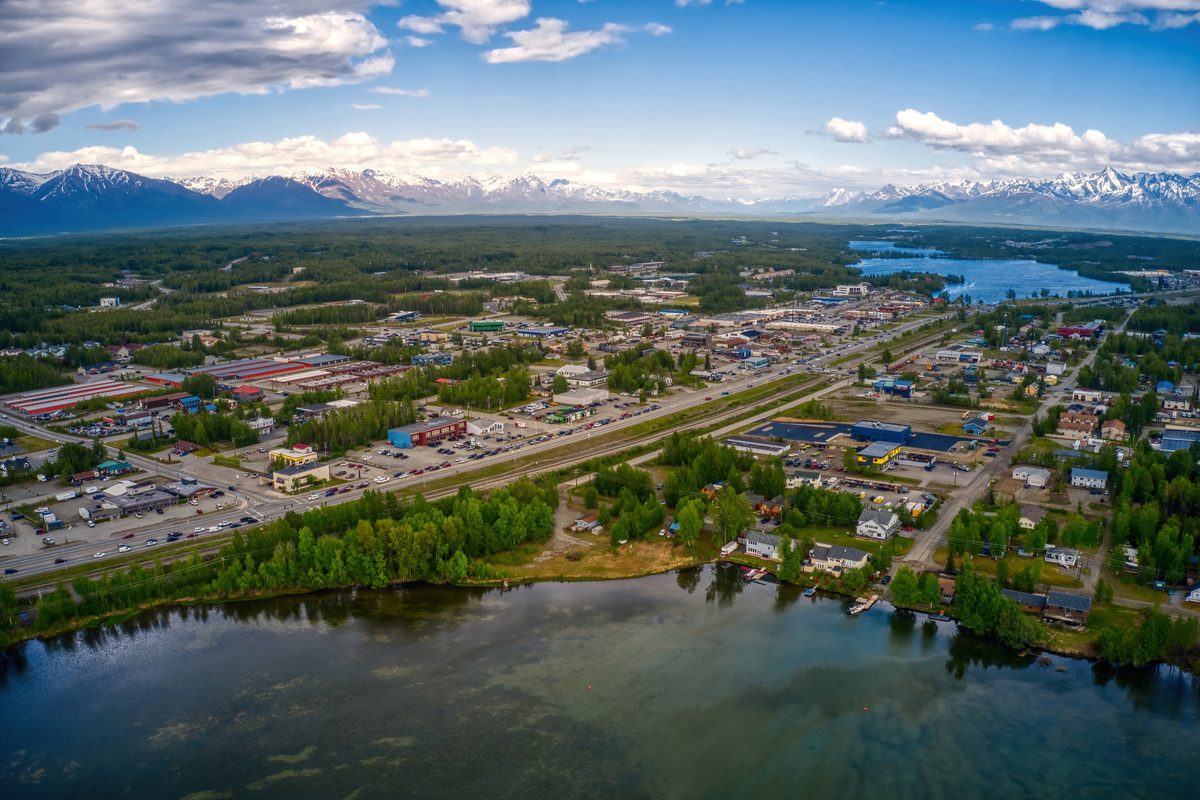
Aerial view of Wasilla, Alaska, with Wasilla Lake in front and the Chugach Mountains on the horizon
Local Market Report

By the HERO Realty Group team | November 2026

October in the Mat-Su Valley means termination dust on the peaks, a scramble for the snow tires, and a housing market that clearly didn’t take the month off.

We pulled every closed home sale in Wasilla and Palmer from the Alaska MLS and lined October 2026 up against September and the past 12 months. Here’s what the Wasilla housing market and the Palmer housing market actually did, minus the hype.

90Wasilla closed sales · Oct
$443,500Wasilla median sold price
25.5 daysWasilla median days on market
42Palmer closed sales · Oct
$432,450Palmer median sold price
17 daysPalmer median days on market

The quick version: Wasilla’s October median price was the highest monthly median in our 12-month data, even as sales slowed a bit from summer. Palmer had fewer sales and a lower median than September, but homes there still moved faster than in Wasilla.

1. Wasilla: Prices Held, the Pace Slowed

Wasilla had 90 closed home sales in October, down from 97 in September. The median sold price was $443,500, up from $435,000 the month before. That’s the highest monthly median in the 12 months of data we looked at.

The bigger change was speed. The median home took 25.5 days on market in October, compared with 14 in September. Buyers were still paying up, with 60% of homes closing at or above their final list price, but they were taking more time to decide. Fair enough. Nobody wants to rush a decision while scraping a windshield.

Wasilla at a glance

Closed homes, townhomes and condos · Alaska MLS

  Oct 2026 Sept 2026 12 months
Closed sales 90 97 1,054
Median price $443,500 $435,000 $431,508
Average price $469,426 $462,391 $459,678
Median days on market 25.5 14 17
Sold at or above list 60% 69.1% 67.9%

“12 months” = Nov 10, 2025 through Nov 10, 2026. “At or above list” compares sold price with final list price, so some homes may have had price cuts first.

Wasilla closed sales by month

December 2025 – October 2026 · October highlighted

DecJanFebMarAprMayJunJulAugSepOct

Sales peaked at 120 in July and have eased each month since. November 2025 is left off because our data starts mid-month.

Our takeaway: In Wasilla, well-priced homes are still getting full price. They just aren’t always getting it in the first weekend. Curious where yours lands? Try our Wasilla home value estimate.

2. Palmer: Fewer Sales, Still Quick

Palmer had 42 closed home sales in October, compared with 56 in September. The median sold price was $432,450, down from $446,123 in September and below Palmer’s 12-month median of $465,000.

Before anyone panics: 42 sales is a small group, and the particular mix of homes that happens to close in a given month can move a median quickly. The average price, $503,671, stayed close to the 12-month average of $505,490. Palmer homes also kept moving, with a median of 17 days on market, versus 10.5 in September.

Palmer at a glance

Closed homes, townhomes and condos · Alaska MLS

  Oct 2026 Sept 2026 12 months
Closed sales 42 56 486
Median price $432,450 $446,123 $465,000
Average price $503,671 $522,256 $505,490
Median days on market 17 10.5 11
Sold at or above list 59.5% 71.4% 71%

“12 months” = Nov 10, 2025 through Nov 10, 2026. Small monthly samples can swing medians.

Our takeaway: One soft month doesn’t make a trend in a town Palmer’s size. Watch the 12-month numbers, and if you’re selling, look at what sold near you. Our Palmer home value estimate is a good place to start.

3. How Much Is for Sale Right Now?

As of November 10, 2026, the MLS showed 265 active listings in Wasilla and 139 pending, plus 100 active in Palmer and 65 pending.

If you divide active listings by the average number of monthly sales over the past year, you get roughly 3 months of supply in Wasilla and 2.5 months in Palmer. In plain English, if no new listings came on, it would take about that long to sell what’s out there. That’s a real choice for buyers without being a glut.

The November 10 snapshot

Active listings · rough months of supply

265Wasilla active · ~3 months
100Palmer active · ~2.5 months

Months of supply = active listings ÷ average monthly closed sales (Nov 10, 2025 – Nov 10, 2026). It’s a rule of thumb, not a forecast.

One more thing: the median asking price of active listings was $499,900 in Wasilla and $549,000 in Palmer, and those listings had been on the market a median of 64 and 60.5 days. That isn’t proof of overpricing. Homes still for sale are a different mix than homes that sold. It’s simply a reminder that price and condition matter once a listing has been sitting a while. You can browse Wasilla homes for sale or browse Palmer homes for sale to see what’s out there today.

4. The Wider Mat-Su Valley

Across the whole Mat-Su Valley, there were 156 closed home sales in October at a median of $423,500, compared with 182 sales and $424,000 in September. Prices are basically flat month to month, with slightly fewer sales.

Big Lake: 6 sales in October, median $421,000. Willow: 7 sales, median $268,000. With samples that small, treat these as a postcard, not a trend line.

Why No “Versus Last October”?

Good question. Our MLS export covers closings from November 10, 2025 through November 10, 2026, so October 2025 isn’t in it. Rather than guess, we used September and the trailing 12 months as the comparison. We’ll add year-over-year once we have a clean match.

What Does This Mean if You’re Buying or Selling?

If you’re selling: Prices in Wasilla are holding steady, but homes are taking longer to sell than they did in late summer. Price it right from the start, make sure it shows well, and expect a few weeks, not a few days. Our guide to selling in Alaska covers the prep.

If you’re buying: With two to three months of supply, you have more options and more breathing room than you did in July. Well-priced homes still sell close to asking, so you may not get a huge discount on the good ones. A slower season can still mean fewer people competing with you. Start with our Alaska home buying guide, and get a feel for daily life in Wasilla or Palmer.

Want the numbers for your street?

Town-wide medians are a starting point. If you’re thinking about buying or selling in Wasilla, Palmer or anywhere in the Mat-Su Valley, the HERO Realty Group team is happy to pull the sales that matter for your home and price range. No pressure.

Prefer to talk? Call or text 907-360-7448.

Data note: Source: Alaska MLS closed sales export pulled November 10, 2026 (closings November 10, 2025 – November 10, 2026). Includes Residential and Condominium classes (single-family homes, townhomes and condos); multi-family and land are excluded. Town is the MLS “Closest USPS Town” field. Mat-Su Valley totals use the Matanuska-Susitna Borough field. Months are by close date. Days on market are as reported in the MLS. Active and pending counts are the November 10, 2026 snapshot. Late-recorded closings may change October totals slightly. Figures may differ from other sites that use different areas, property types or methods. Equal Housing Opportunity.

Nov. 17, 2026

Prepared, Not Scared: The Nov. 17 Blackout Rumor and Real Alaska Outage Prep

Alaska Outage Prep

Prepared, Not Scared:The Nov. 17 Blackout Rumor and Real Alaska Outage Prep

Worrying about the entire grid going dark for 90 days? Pretty far-fetched. A power outage in Alaska? Not far-fetched at all. Here’s what’s really on the calendar Nov. 17, and a calm (and slightly cheeky) guide to being ready.

By the Properties of Alaska team | November 2026

If your feed says the lights go out for 90 days starting Nov. 17, take a deep breath and a sip of coffee (while the coffee maker still has power, anyway). Here’s the real story, and a practical plan that works whether the power flickers for an hour or a few days.

We’ve all lived through some “the grid will fall at midnight” moments. Remember Y2K? We’re all still here. Could the grid have a bad day someday? Never say never. But in an Alaska winter, a local outage is the thing to plan for. But we don’t have to live in fear. A few smart basics make an outage a whole lot less stressful, from Anchorage and Eagle River to the Mat-Su Valley. Every source is linked at the bottom, and there’s a printable checklist at the end.

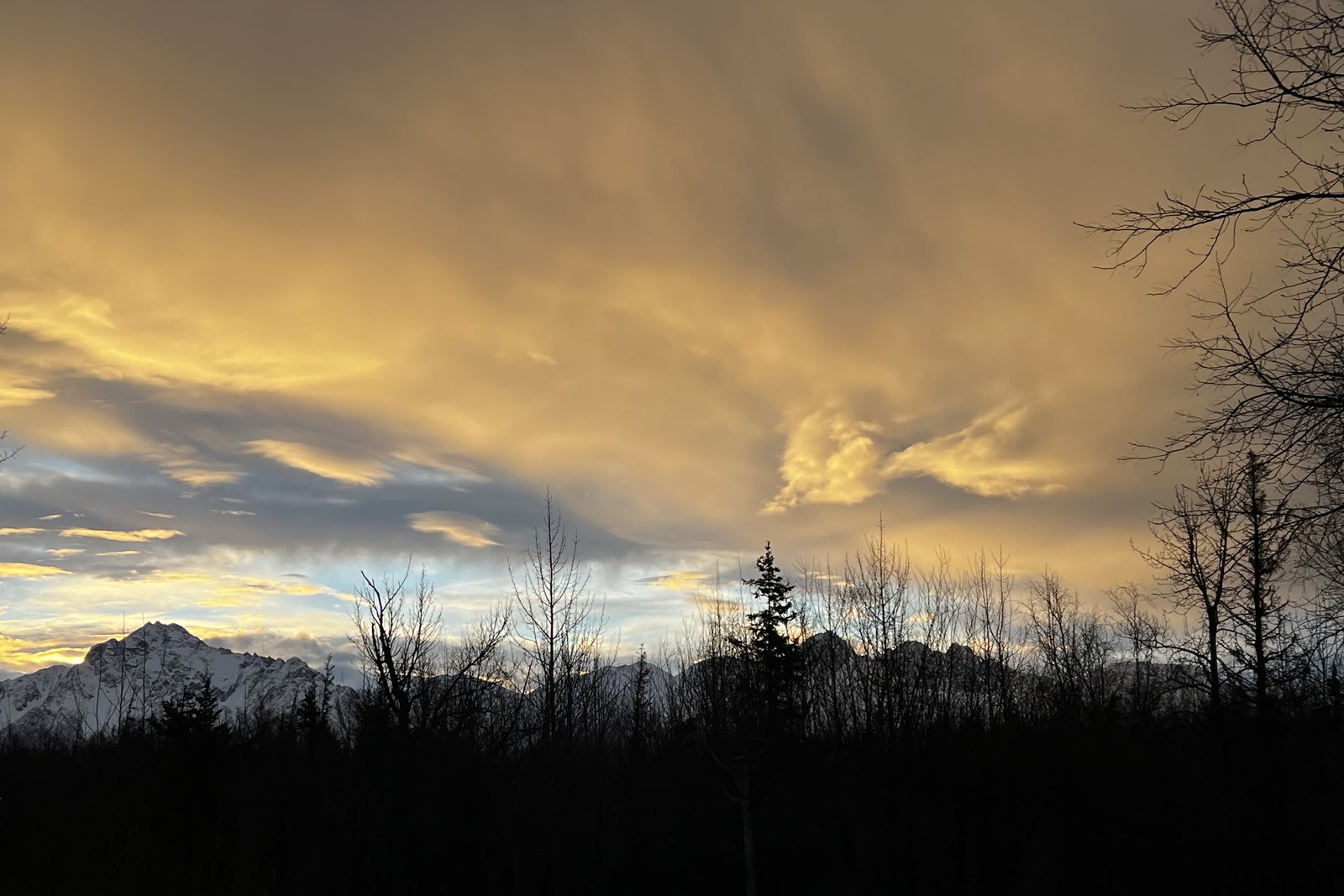
Golden winter sky over snow-capped Pioneer Peak and a dark treeline in the Mat-Su Valley, Alaska
Alaska winter, ready. A little prep turns an outage from a crisis into an inconvenience.

What’s trending: the 90-day blackout rumor

TikTok posts say a 90-day nationwide blackout starts Nov. 17, 2026, and tell people to stock up. Some use video clips of President Trump that were manipulated with AI to make it look like he announced it. PolitiFact found the clip was altered and that there is no evidence a nationwide blackout is expected. Snopes likewise found no evidence for it.

10:20 a.m.Alaska time, Tue. Nov. 17 (2:20 p.m. ET)
~1 minuteHow long the test lasts
Radio + TVNot sent to phones
The rumor

“A 90-day nationwide blackout begins Nov. 17. Stock up now.”

Spread by TikTok posts, some with AI-altered clips. Fact-checkers found no evidence behind it.

What’s actually scheduled

FEMA and the FCC are running a routine nationwide test of the Emergency Alert System. FEMA says it’s required at least once every three years, and that no action is needed.

The test interrupts radio and TV for about a minute with a message that says, “This is only a test. No action is required by the public.” Per FEMA’s FAQ, it won’t send a Wireless Emergency Alert to your phone this time. And if something real comes up that day, FEMA says the backup date is Dec. 3.

Why did the rumor feel believable? According to Snopes, there were several real tech glitches in the days before: a Microsoft Outlook outage on Nov. 12, a nationwide flight ground stop on Nov. 13, and software outages at several major banks on Nov. 16. Those are good reminders that things do break sometimes, which is a perfectly good reason to be ready, and a pretty poor reason to panic.

Our take

Could the power go out? Sure, it happens. Should we live in fear? Nope. Prepared, not scared.

Real outages do happen (hello, Alaska winter)

Alaskans know this already. Wind, snow, ice and the occasional tree leaning on a line can all knock out power, and in cold weather that matters more. Here’s what the utilities themselves say:

  • Matanuska Electric, MEA (Mat-Su Valley and Eagle River): MEA says that regular outages after business hours, like a tree on the line or snow unloading, take on average 3 to 4 hours to restore, and asks members to be prepared. It also warns that extended winter outages may mean using backup heat and power, safely.
  • Chugach Electric (Anchorage area): Chugach has an outages page with a live outage map, a current energy status, and its own tips for before, during and after a power outage.
Alaska aside

Three to four hours is plenty of time to find out who in your house actually owns a working flashlight.

Up north, Fairbanks’ Golden Valley Electric has also asked its members to be ready for possible brief rotating outages this winter.

So the goal is simple: be comfortable for a few days without power. Alaska’s emergency managers call it “Good, Better, Best.” Their goal is for every household to eventually have two weeks of supplies, and they say any amount of supplies is a good start.

Good3 daysStart here. Water, food, light, warmth, meds.
Better7 daysAdd to your kit a little at a time.
Best2 weeksA full buffer, built up over time.
Quick wins

Five things to knock out this weekend

Small, doable, and no headlamp-shopping spree required.

  • Check your carbon monoxide alarms and make sure they have battery backup.
  • Store water: 1 gallon per person, per day, to start with 3 days.
  • Find the flashlights, headlamps and batteries (and see if the flashlight actually turns on).
  • Charge a power bank and keep it charged.
  • Write down your utility’s outage number and bookmark its outage map.
1

Heat and CO alarms: the no-jokes section

Most of what’s in this post is meant to be easy and a little fun. This part is the serious one. When the power goes out and it’s cold, people reach for backup heat, and that is exactly when carbon monoxide (CO) becomes dangerous. The CDC says CO is an odorless, colorless gas that can cause sudden illness and death.

Outside only: generators, grills and camp stoves

  • Never run a generator inside your home or garage, even with doors and windows open. Keep it outside, more than 20 feet from windows, doors and vents.
  • Never use a charcoal grill or a portable camp stove indoors, and never heat your home with a gas oven.
  • Have battery-powered or battery-backup CO alarms. The CDC says near every sleeping area, and Ready.gov says on every level of your home.
  • Alaska DHS&EM’s CO flyer also says to keep dryer, furnace, stove and fireplace vents clear of snow and debris.

If you plan to use a wood stove or fireplace for backup heat, the CDC says use it only if it’s properly vented to the outside, follow the manufacturer’s instructions, and have your heating system serviced by a qualified technician every year. Extra blankets, sleeping bags and warm coats count as a backup heat source too.

2

Pipes: the divas of winter

Frozen pipes are the one houseguest nobody RSVPs for. If the power and the heat are both out for a while, a few habits help. The CDC’s tips for when very cold weather is expected:

  • Leave water taps slightly open so they drip continuously.
  • Keep the temperature inside your home as warm as you can.
  • Open the cabinet doors under kitchen and bathroom sinks so heated air can reach the pipes.
  • If a pipe does freeze, don’t use a torch. Thaw it slowly with warm air from an electric hair dryer.

MEA also says to know how to drain your home’s water supply and water heating system ahead of time, and to drain them if the temperature inside falls below 40 degrees and the power is still off (earlier if your house has cold spots). If you aren’t sure how, ask a plumber to show you before you need it.

3

Water: the well pump quits when the power does

If your Mat-Su Valley home is on a well, you probably already know the timing. The pump runs on electricity, so when the power goes out, the running water usually goes right along with it, generally while you’re mid-shower. The fix is easy: store water before you need it.

Ready.gov recommends storing at least one gallon of water per person per day for several days, for drinking and sanitation. The CDC gives the same one-gallon rule. Chugach Electric’s outage tips specifically call out one gallon per person per day in case a local well or city water system is unavailable. The math: people × days × 1 gallon.

  • Buy commercially bottled water and store it in the sealed original container in a cool, dark place.
  • Water you bottle yourself should be replaced every six months.
  • Children, nursing mothers and sick people may need more. Add extra for pets too.
  • If you have a well, ask an electrician whether a generator can run your pump safely, and how to set it up the right way (see the generator section).
4

Food: no cooking required

Pick shelf-stable food your family will actually eat, ready to eat or easy to prepare, and add a manual can opener. Ready.gov’s kit list calls it out because it’s the thing everybody forgets, right after they open the one can that needs it.

Ready.gov says a closed refrigerator keeps food cold for about four hours, and a full freezer for about 48 hours. So keep the doors shut, and use a thermometer if you can.

Alaska aside

Yes, we know your garage is basically a second freezer for half the year. Charming. But when it comes to food safety, go by a thermometer, not vibes: Ready.gov says to toss food that has been at 40°F or higher for two hours or more, or that looks, smells or feels off.

5

Generators: outside only, wired by a pro

A generator can be a big help in an Alaska outage, and a big hazard if it’s used wrong. There are two rules that matter most.

Two rules, no exceptions

  • Outside only. Never run a generator in the house, garage or any enclosed space. Ready.gov says to keep generators and fuel outdoors and at least 20 feet from windows, doors and attached garages, and to keep the generator dry.
  • Never backfeed. Don’t plug a generator into a wall outlet or wire it straight into your home’s electrical system. MEA warns that without a proper switching setup that isolates your home from the grid, power can feed back into the utility’s lines, and linemen working to restore power can be injured or killed. Chugach Electric says a generator connected to your home must have a transfer switch installed by a qualified electrician.

The safe way to power a few things is to run heavy-duty extension cords from the generator (outside) to your appliances, or to have an electrician install a transfer switch. Let the generator cool before refueling, and follow the manufacturer’s instructions.

6

Light, charging and the forearm-workout radio

The basics here are cheap, and mostly already in a drawer somewhere.

  • Use flashlights, headlamps or battery-powered lanterns instead of candles. The CDC says candles can lead to house fires. Headlamps keep both hands free, and help you spot the moose in the driveway before it spots you.
  • Keep extra batteries for flashlights, radios and anything else you’d miss.
  • Keep a charged portable charger or power bank. Ready.gov suggests planning for batteries or other alternative power sources for anything that relies on electricity.
  • Have a battery or hand-crank radio. Chugach Electric suggests one that can pick up NOAA weather alerts. Bonus: cranking it counts as a free forearm workout.

One fun fact for tomorrow: the National Weather Service notes that NOAA Weather Radios will not receive the Nov. 17 test. It runs through regular radio and TV.

7

Meds and medical devices

This is an easy one to overlook and an important one to plan. Ready.gov says to talk to your medical provider about a power outage plan for any electric-powered medical devices and refrigerated medicines, and to ask how long a medicine can be stored at higher temperatures.

  • Keep a written list of what you take, what it’s for, and the dosage. Alaska’s “My Emergency Plan” worksheet recommends this too.
  • Keep prescriptions, over-the-counter meds and eyeglasses (and contact lens solution) together where you can grab them.
  • Chugach Electric’s outage tips say anyone who depends on electricity for health reasons should plan to relocate to a hotel or medical facility with backup power.

This is general information, not medical advice. Your doctor, pharmacist or equipment supplier can tell you what makes sense for you.

8

Anchorage and Mat-Su Valley outage maps: bookmark them now

The best time to find your utility’s outage map is right now, while your Wi-Fi still works. Bookmark it, and save the outage number in your phone. Ready.gov also reminds us to sign up for local alerts.

MEA (Mat-Su Valley and Eagle River)

Outage map, plus how to report an outage. Mat-Su Valley: 907-746-7697. Eagle River: 907-696-7697.

Chugach Electric (Anchorage area)

Outage map and reporting. Dispatch: 907-762-7888.

Alaska DHS&EM and Ready.gov

ready.alaska.gov for state preparedness info and Ready.gov’s alerts page for how to get emergency alerts.

9

Check on your neighbors

Alaska neighbors will lend you a jump cable, a shovel and an opinion. Add one more thing to the list: a quick knock on the door when the lights go out. The CDC specifically says to check on older friends and neighbors often during very cold weather, to make sure their homes are heated properly.

  • Swap phone numbers with the people next door.
  • Check in on anyone who lives alone, relies on electric medical equipment, or may have trouble staying warm.
  • Share a charger, a warm drink or a spare headlamp if you can.

Ready.gov’s Make a Plan page also suggests picking a family meeting place and an out-of-state contact everyone can check in with.

Quick detour: earthquakes and Y2K

Alaskans have been through bigger tests than a one-minute radio beep. After the magnitude 7.1 Anchorage earthquake on Nov. 30, 2018, the collapsed Minnesota Drive off-ramp reopened on Dec. 4, four days later. Ready.gov’s simple earthquake steps still apply: Drop, Cover and Hold On during shaking, secure heavy furniture, and know that a standard homeowner’s policy doesn’t cover earthquake damage, so it’s worth a call to your insurance agent.

And Y2K? We’re all still here. Lesson learned: skip the panic, keep the flashlight.

HERO Realty Group

Your printable outage checklist

Print this page (Ctrl/Cmd + P) and only this checklist will print. Stick it on the fridge (while the fridge is running) and work up from 3 days to 7 days to 2 weeks.

Heat and CO safety

  • Battery or battery-backup CO alarms (near sleeping areas and on every level)
  • Safe backup heat and fuel; blankets, sleeping bags, warm clothes
  • Vents clear of snow
  • Generator, grill and camp stove: outside only, never in the house or garage

Generator

  • 20+ feet from windows, doors and vents
  • Never plugged into a wall outlet or the panel
  • Transfer switch installed by a qualified electrician

Water (well pump needs power)

  • 1 gallon per person, per day (3 days to start)
  • Extra for pets, kids and anyone sick
  • Sealed bottles in a cool, dark place
  • Know how to drain your pipes and water heater

Food (no cooking needed)

  • Shelf-stable food you’ll actually eat
  • Manual can opener
  • Thermometer for the fridge and freezer
  • Doors stay shut: ~4 hours fridge, ~48 hours full freezer

Light and power

  • Flashlights or headlamps (and a moose-spotting plan)
  • Extra batteries
  • Charged power bank
  • Battery or hand-crank radio (forearm workout included)

Meds and health

  • Prescriptions and over-the-counter meds
  • Written medication list with doses
  • Plan for refrigerated meds and powered medical devices
  • First aid kit; eyeglasses and contact solution

Stay informed

  • Utility outage number saved: Chugach 907-762-7888, MEA 907-746-7697 (Mat-Su Valley) or 907-696-7697 (Eagle River)
  • Outage map bookmarked
  • Local alerts set up

People

  • Family meeting spot and out-of-state contact
  • Neighbors’ phone numbers
  • Check on neighbors who may need help
  • Cash on hand

Alaska power outage checklist from Properties of Alaska | HERO Realty Group | propertiesofalaska.com. Sources: Ready.gov, CDC, Alaska DHS&EM (ready.alaska.gov), Chugach Electric and MEA. Prepared, not scared.

HERO Realty Group

Moving soon, or just have questions?

If you’re buying a home, ask to be shown the water shutoff, gas shutoff and breaker panel during your walkthrough. If the home is on a well, ask about the pump and whether there’s a generator hookup or transfer switch. Those are small questions that pay off in the first outage. And if you’re thinking about a move in Anchorage, Eagle River or the Mat-Su Valley, the team is happy to answer questions. No pressure, just a friendly conversation.

Prefer to talk? Call or text 907-360-7448. Or read more from the blog.

Alaska power outage FAQ

What should I do when the power goes out in Alaska?

Keep the refrigerator and freezer doors closed, use flashlights or headlamps instead of candles, and keep warm with blankets and layers. Run a generator only outdoors, never heat your home with a gas oven, and make sure you have battery-backup carbon monoxide alarms. Report the outage to your utility, and check on your neighbors. See Ready.gov’s power outage tips.

Where can I check the MEA or Chugach outage map?

MEA (Mat-Su Valley and Eagle River) has an outage map and a page on how to report an outage. Chugach Electric (Anchorage area) shows its outage map on its outages page.

Is there a 90-day blackout starting Nov. 17?

PolitiFact and Snopes found no evidence of one. What is scheduled is a routine FEMA and FCC test of the Emergency Alert System at about 10:20 a.m. Alaska time (2:20 p.m. ET). It lasts about one minute, airs on radio and TV only, and needs no action. Local outages can still happen in an Alaska winter, so it’s smart to be ready for a few days without power.

Can I run a generator in my garage?

No. The CDC says never to use a generator inside your home or garage, even with the doors and windows open. Run it outside, more than 20 feet from windows, doors and vents, and use a battery-backup CO alarm. Don’t plug it into a wall outlet or your electrical panel. A generator connected to your home needs a transfer switch installed by a qualified electrician.

Please note: This post is general preparedness information from official sources, not professional safety, medical, legal or insurance advice. Follow guidance from local officials and your utility companies. Details about the Nov. 17 test and the fact-checks were current as of Nov. 16, 2026. Utility alert levels change, so check your utility’s page for the latest. Equal Housing Opportunity.

Posted in Education
Nov. 1, 2026

Mat-Su Prop C Explained: What a YES or NO Vote Means for Your Property Taxes

Mat-Su homeowner brief

Mat-Su Prop C Explained:What a YES or NO Vote Means for Your Property Taxes

If you own a home in the Mat-Su Valley, or you're thinking about buying one, there's a question on the Tuesday, November 3, 2026 regular Borough election ballot that could change what you pay each year: Proposition C.

By Ryan Lunski | November 2026

Update (November 2026)

Matanuska-Susitna Borough voters rejected Proposition C in the November 3, 2026 regular Borough election. The measure would have paired a $75,000 property tax exemption for qualifying owner-occupied homes with a new 1% areawide sales tax. A yes vote would have authorized both; a no vote authorized neither.

The Borough's certified results show 13,753 Yes (34.9%) and 25,692 No (65.1%), out of 39,445 votes on the measure. Because it did not pass, property tax bills and sales-tax rules in the Borough remain unchanged. The rest of this post was written before the election and is kept as originally published for reference.

Sources: Matanuska-Susitna Borough certified election results (PDF); Borough ballot proposition summary; Mat-Su Sentinel, Nov. 13, 2026. HERO Realty Group takes no position on Proposition C.

1%Proposed areawide sales tax on qualifying purchases
$75,000Assessed value exempted on qualifying owner-occupied homes
$10Most tax on a single transaction (first $1,000 only)
Nov 3Regular Borough election day, 2026

What does a YES or NO vote on Prop C mean for you? I'm Ryan Lunski with HERO Realty Group, and I'm not here to tell you how to vote. Below I break down what each answer would do, and I walk through a sample household's numbers so you can make an informed decision at the polls.

1

What a YES Vote Means

Prop C is one question with two parts, and you can't get one without the other. A YES vote would:

  • Add a 1% areawide sales tax on qualifying sales, services and rentals across the whole Borough, including inside Wasilla, Palmer and Houston.
  • Exempt the first $75,000 of assessed value from property tax on qualifying owner-occupied homes. Homeowners would need to apply, and it can't be combined with senior, disabled or farm exemptions.

A NO vote authorizes neither. Property taxes stay as they are, and there is no new areawide sales tax.

If it passes, the Borough says the sales tax would start April 1, 2027, and the lower property tax bills would follow with the August 2027 payments.

2

A Sample $400,000 Home

Here's an example. Based on the Borough's 2026 mill rate, I estimate the exemption would save the owner of a $400,000 home about $600 a year, or about $50 a month. The Borough's own estimate for a $400,000 home is higher, at about $750 a year. Your actual savings depend on your home's assessed value and the mill rate where you live.

Now the other side. If your family spends about $3,000 a month on purchases that would be hit by the full 1%, that's about $360 a year in new sales tax. With my $600 estimate, that household comes out about $240 a year ahead.

Sample household: $400K home, $3,000/month in qualifying purchases

Ryan's estimates, per year

~$600Property tax saved
~$360New sales tax paid

Net: about $240 a year ahead. Using the Borough's $750 savings estimate instead, the same household would come out about $390 ahead.

3

Where's the Break-Even Point?

With a $600 savings, you'd have to spend about $5,000 a month on qualifying purchases before the sales tax cancels out the property tax break. With the Borough's $750 figure, the break-even is closer to $6,250 a month.

Two details matter here. Many purchases are exempt, including many healthcare services, food assistance purchases and long-term residential rentals. And the tax generally applies only to the first $1,000 of each transaction, so the most you'd pay on a single purchase is $10. Big-ticket items don't move the needle much.

My takeaway: Whether Prop C helps or costs you depends on two numbers: your home's assessed value and how much you spend on taxable purchases. Renters and people who don't qualify for the exemption would pay the sales tax without getting the property tax break.

4

The Borough's Side of the Ledger

The Borough projects the 1% sales tax would bring in about $21 million a year, while the exemption would reduce property tax revenue by about $12 million to $15 million, depending on how many homeowners apply. Those are estimates, but the spread works out to roughly $6 million to $9 million a year more for the Borough.

5

What It Means if You're Buying or Selling

If you're buying: Property tax is part of your monthly payment. A lower tax bill on an owner-occupied home could shift your numbers a little, and every dollar counts when you're qualifying for a loan. Rates also dipped slightly recently, so it's worth asking your lender to rerun your numbers.

If you're selling: Buyers look at the total monthly cost of owning a home, not just the price. Knowing how Prop C could change the annual tax on your home helps you answer their questions.

Every dollar counts. Whatever the outcome, it helps to know how local ballot measures affect your household. Find the full ordinance and Borough election results at matsu.gov/elections.

HERO Realty Group, Keller Williams Realty Alaska Group

Want to Know What Your Home Could Sell For?

I'm Ryan Lunski with HERO Realty Group. If you're thinking about buying or selling in the Mat-Su, let's look at the real numbers for your home, including taxes, payments and value.

Or call or text HERO Realty Group at 907-360-7448, or send us a message.

Note: This post is for general information only. It is not tax, legal or voting advice, and HERO Realty Group takes no position on Proposition C. The $600 savings, $360 sales tax, $240 net and $5,000 break-even figures are Ryan's estimates for a sample household. The $750 savings estimate, the $21 million and $12–15 million revenue projections, the $1,000 per-transaction limit and the effective dates come from the Matanuska-Susitna Borough (Ordinance Serial No. 26-072 and matsu.gov/ballot-propositions). Your results will vary. Check the ordinance for eligibility and exemption details.

Oct. 17, 2026

Eagle River Market Update, October 2026: Why Some Homes Sell in 5 Days

Aerial view of the Eagle River valley below the Chugach Mountains in Alaska
Local Market Report

By the HERO Realty Group team | October 2026

Some Eagle River homes are selling in just days. Others sit on the market for weeks or months. So what’s actually happening in our local real estate market?

We took a close look at the latest 12-month residential MLS snapshot for Eagle River. There’s a lot worth understanding in these numbers: how many homes sold, where asking prices stand, how quickly listings moved, and what buyers and sellers can learn from the numbers. Buyers are still making strong offers, but not every property is getting the same response.

417Closed residential sales
$500,000Median closed sale price
5 daysMedian days on market — closed listings
77.2%Closed at or above final asking price
41Active residential listings in this MLS snapshot
48Pending listings in this MLS snapshot

1. Buyers Are Still Willing to Pay Asking Price — or More

Of the 417 residential properties that closed during the period, 173 sold above their final asking price and another 149 sold right at asking. That’s 77.2% of closed sales at or above the final list price.

For sellers, that’s encouraging. It tells us buyers are still responding when a property offers the right combination of location, condition, features and price. But remember: these comparisons use the final asking price, so a home could have had price reductions before selling.

How did Eagle River homes sell versus asking price?

417 closed residential sales · compared with final asking price

41.5% above (173)35.7% at (149)22.8% below (95)

77.2% sold at or above their final list price. Some listings may have had reductions before closing.

Our takeaway: Buyers haven’t disappeared. The goal is to give them a compelling reason to choose your home.

2. Five Days Versus 49 Days: What’s the Difference?

Here’s the number that really stands out: closed homes had a median of just 5 days on market. Meanwhile, the 41 homes that were still active had accumulated a median of 49 days on market. The 64 canceled listings had a median of 78 days.

Those numbers describe different groups of properties, so they don’t mean the entire market suddenly slowed from 5 days to 49. But they do show that the listings still available or ultimately canceled had experienced much longer marketing periods than the typical home that successfully sold.

When we advise a seller, this is why we look closely at comparable sales, competition, presentation and the initial list price. A strong launch matters.

Median days on market, by status

Different listing groups · a snapshot, not a historical trend

Closed
5
Pending
27
Active
49
Canceled
78
Expired
162

Days shown are medians. Expired status includes only four records, so interpret that figure cautiously.

3. Pricing It Right From Day One Pays Off

This was the clearest pattern in the whole dataset. Homes that sold without a price reduction went under contract in a median of 4 days and sold for about 101% of their original asking price on average.

Homes that needed a price cut took a median of 44 days and sold for about 95% of their original asking price. In other words, starting too high didn’t get those sellers more money. It cost them time and roughly five percentage points of their original price.

Priced right vs. price reduced

Closed residential sales · median days on market and average sale-to-original-list ratio

4 daysNo price cut · ~101% of original price
44 daysPrice cut · ~95% of original price

“Price cut” means the final list price was below the original list price.

Our takeaway: The first two weeks on the market are when your home gets the most attention. Price it to win that window. Want to know where your home should start? Get a free Eagle River home value estimate.

4. The Homes Available Today Are Priced Higher Than the Homes That Sold

The median closed sale price was $500,000. The median asking price among active listings was $630,000 — a $130,000 difference.

Does that mean homes are overpriced by 26%? Absolutely not. The homes currently for sale may be larger, newer, better appointed or concentrated in higher price ranges than the homes that closed. It’s not an apples-to-apples comparison.

What it does tell us is that buyers shopping today may be seeing a different mix of inventory than the homes represented by the last year of completed transactions. That’s why area- and property-specific comparisons matter more than broad averages. You can browse every Eagle River home for sale to see what’s on the market right now.

Asking prices versus completed sale prices

Median prices · different groups of properties

$500KClosed sale price
$630KActive asking price

The $130,000 difference is not a measure of overpricing or appreciation; property mix can vary substantially.

5. Eagle River Still Has Meaningful Sales Activity

June led the period with 58 closings, followed by 49 in July and 45 each in August and September. That’s a reminder that the local market continued producing transactions well beyond the early summer rush.

We also had 48 pending listings at the time of the export. Pending doesn’t guarantee a completed sale, but it shows there were additional transactions working toward closing.

One caution: this is a 12-month snapshot, not a year-over-year comparison. We can see seasonality and differences between listing statuses, but we can’t claim prices or demand are definitively rising or falling compared with last year from this dataset alone.

Closed sales by month

October 2025 – October 14, 2026

17 
29 
26 
16 
24 
24 
25 
43 
58 
49 
45 
45 
16 
Oct*NovDecJanFebMarAprMayJunJulAugSepOct*

*October 2025 and October 2026 are partial months; October 2026 data ends October 14. Monthly figures reflect the export’s closing dates.

Prefer to watch? Here’s the short version.

A one-minute video take on the Eagle River numbers above. The article has the full detail.

What Does This Mean if You’re Buying or Selling?

If you’re selling: Don’t assume that because some homes sell in five days, yours automatically will. The right list price, strong photography, condition and marketing strategy are all important. We’d rather help you understand your competition before you go live than explain weeks later why the listing isn’t getting traction.

If you’re buying: Don’t assume every home is getting multiple offers, either. Some properties are attracting fast action, while others have spent much longer on the market. Knowing the specific property’s history and comparable sales can help you decide when to move quickly and when to negotiate.

Curious what your home could sell for?

If you’re thinking about buying or selling in Eagle River, the HERO Realty Group team is happy to look at the numbers that matter for your price range and property. No pressure, just a straight conversation.

Prefer to talk? Call or text 907-360-7448.

Data note: Source: Alaska MLS residential export, Area 90 (Eagle River), October 2025–October 14, 2026. 574 listing records: 417 closed, 41 active, 48 pending, 64 canceled and 4 expired. Status counts reflect the exported snapshot; closed transactions cover the reporting period. Days on market and prices are medians unless otherwise specified. Market data is subject to change. Figures may differ from third-party sites using different geography, property types or reporting methods. Equal Housing Opportunity.

Sept. 12, 2026

September 2026 - Alaska Real Estate Market Report

Alaska Real Estate Market Update — September 2026

Alright, here’s what I’m seeing in the market right now.

There’s been a lot of talk this year about interest rates, home prices, inventory, and whether the market is finally shifting in favor of buyers.

Some of that is true.

But the actual numbers are a little more interesting.

I pulled the current residential supply and demand numbers for Anchorage, Eagle River, Palmer and Wasilla and compared them to where we were back in May.

The short version?

Buyers have a lot more to choose from than they did this spring.

But that has not translated into falling prices across the board.

Quick Look: May vs. September

Market Active May Active Sept. Avg Sold May Avg Sold Sept. Inventory
Anchorage 184 404 $546,038 $568,448 2.10 mo.
Eagle River 35 60 $519,883 $561,515 1.75 mo.
Palmer 77 100 $496,883 $507,120 2.50 mo.
Wasilla 150 262 $458,343 $474,464 3.40 mo.

So right away you can see the big change: inventory is up. A lot.

Anchorage has more than doubled from 184 active homes in May to 404 today. Wasilla jumped from 150 to 262. Eagle River went from 35 to 60, and Palmer increased from 77 to 100.

At the same time, average sold prices increased in every one of those areas.

Anchorage

Active inventory went from 184 homes in May to 404 homes today — roughly a 120% increase.

Months of inventory rose from 1.01 months to 2.10 months.

At the same time, the average sold price increased from approximately $546,000 to $568,448.

My take

Anchorage has definitely loosened up compared to spring.

Buyers aren't staring at the same painfully small pool of houses anymore, and they have a little more room to be selective.

But I wouldn't call this a weak market. Homes that are priced correctly and show well are still selling.


Eagle River

There are currently 60 active homes, compared with 35 in May.

That's about a 71% increase in inventory, but the market still has only 1.75 months of supply.

Average sold price increased from approximately $519,883 to $561,515.

My take

Eagle River continues to be one of the tighter markets locally.

There are more homes available than there were this spring, but good inventory is still getting absorbed pretty quickly.


Palmer

Inventory increased from 77 active homes in May to 100 today.

Months of inventory increased from 1.98 to 2.50 months.

Average sold price increased modestly from approximately $496,883 to $507,120.

My take

Palmer feels more balanced than it did earlier in the year.

Buyers have more options, especially once you get into the upper price ranges, and sellers probably need to be a little more thoughtful with pricing.


Wasilla

There are currently 262 active homes, compared with 150 in May.

That's almost a 75% increase in inventory.

Months of supply jumped from 1.94 months to 3.40 months.

Average sold price still increased from approximately $458,343 to $474,464.

My take

This is probably the most buyer-friendly of the four markets right now.

Three-plus months of inventory is a meaningful difference from what we were seeing earlier this year.

It doesn't mean sellers are in trouble, but buyers have more choices, and sellers can't necessarily throw a number at the wall and expect multiple offers.


So... Is This a Buyer's Market?

Not really. At least not across the board.

What I think we're seeing is a normalization of the market.

Inventory is rebuilding. Buyers finally have more than a handful of homes to choose from. Negotiations are becoming more common.

But home values haven't collapsed.

Actually, average prices have increased in every market we looked at since May.

What This Means If You're Selling

I would still feel very comfortable selling in this market.

You just have to be realistic.

The properties that are selling quickly generally have three things going for them:

Good condition. Good presentation. Good pricing.

What This Means If You're Buying

Honestly, buyers are in a much better position than they were earlier this year.

There are more homes to look at, more opportunities to negotiate, and in some price ranges sellers are becoming much more receptive to concessions.

The catch is that the really good houses still move.

Want to Know What Your Neighborhood Is Doing?

These are broad market numbers.

Your neighborhood, property type and price range can look completely different.

If you're thinking about buying, selling, investing, or you're just curious what your home would realistically sell for right now, feel free to reach out.

I'm happy to pull the numbers.

HERO Realty Group
KW Realty Alaska Group

Market statistics sourced from Alaska Multiple Listing Service supply and demand reports. MLS data may not reflect all real estate activity.

May 18, 2026

Palmer Alehouse: Why Palmer’s Small-Town Restaurant Scene Is Better Than People Expect

Palmer Alaska Lifestyle

Palmer Alehouse: Why Palmer’s Small-Town Restaurant Scene Is Better Than People Expect

Great food, local beer, mountain views, live music, and authentic Alaska atmosphere — Palmer Alehouse is one of those places that reminds you why people fall in love with Palmer, Alaska.

Situated in the lovely, charming, and little town of Palmer, Alaska, lies the best spot you have either never been to… or always go to if you are a local.

Palmer Alehouse is one of those places that somehow manages to feel like both a local hangout and a destination at the same time. From the backdrop of mountains ripping out of the earth trying to touch the Alaskan sky, to the creaky wooden floors right when you walk in, the atmosphere feels unapologetically Alaska.

And honestly, that is part of what makes Palmer itself so special.

There is something refreshing about places that still feel authentic. Not over-designed. Not trying too hard. Just genuinely good food, good people, good views, and a community atmosphere that feels difficult to replicate in larger cities.

Palmer Alehouse captures that feeling perfectly.

Interior of Palmer Alehouse in Palmer Alaska
Warm lighting, local atmosphere, sports on TV, cold beer, and authentic Alaska energy — Palmer Alehouse feels like the kind of place you instantly settle into.
Local Beer & Alaska Vibes

A Strong Tap List Is Basically Mandatory In Alaska

Let’s address the important topic immediately: yes, they have beer on tap. And not just random filler beer either — Palmer Alehouse usually carries a strong lineup of local and Alaska craft brews.

Which, frankly, is exactly how it should be.

Alaska has some incredibly good breweries, and Palmer Alehouse leans into that local feel instead of pretending imported cucumber-water pilsners from somewhere called “Upper Coastal Meadow Brewery” are the pinnacle of civilization.

And listen… if you are not an IPA fan, I am not saying we cannot be friends. I am just saying I may quietly question your life choices while respectfully nodding.

Jokes aside, the beer selection is one of the things that makes the place feel genuinely local. Whether you are stopping in after hiking Hatcher Pass, meeting friends for dinner, or grabbing food after work, there is something very Alaska about sitting down with a local brew while mountains loom outside the windows like they own the place.

Simple Food Done Right

One thing Palmer Alehouse does well is avoiding the trap a lot of restaurants fall into:

trying to do too much.

Their menu is relatively straightforward, but honestly, that is part of the charm. Burgers. Pizza. Wings. Sandwiches. Salads. Comfort food that actually sounds good after a long Alaska day instead of tiny artistic portions arranged like a modern art project.

And somehow, despite being known for burgers and beer, they also have a genuinely solid Caesar salad.

Which feels worth mentioning because sometimes restaurant Caesar salads taste like someone emotionally gave up halfway through making them.

Palmer Alehouse manages to strike a balance that a lot of places miss:

  • simple without feeling boring
  • comfortable without feeling cheap
  • casual without sacrificing quality
  • local without trying too hard to look “rustic”

It is the kind of place where almost everybody can find something they want, which honestly makes it one of the better group dinner spots in Palmer.

Food and beer at Palmer Alehouse in Palmer Alaska
Great burgers, sandwiches, fries, local beer, and genuinely satisfying comfort food make Palmer Alehouse a favorite local stop.
More Than Just A Restaurant

Concerts, Events & Outdoor Seating

Another reason locals love Palmer Alehouse is because it feels tied into the actual community instead of simply existing inside it.

They frequently host live music and concerts, especially during the warmer months, and they also have outdoor seating that works incredibly well during Alaska summers when everybody suddenly remembers sunlight exists again and refuses to go indoors for several months.

The outdoor atmosphere during summer evenings is genuinely hard to beat. Long daylight hours, mountain views, cool air, local beer, food, music, and friends sitting outside talking while the sun somehow still refuses to set at 10:30 PM.

It is one of those experiences that quietly reminds you why people fall in love with Alaska.

Palmer Alehouse also has upstairs event hosting space, making it a popular option for:

  • private events
  • community gatherings
  • birthday parties
  • meetings
  • celebrations
  • group dinners

In smaller communities, places like this become more than restaurants. They become gathering places. And honestly, that sense of community is one of the underrated benefits of living in Palmer.

Outdoor concert and mountain views at Palmer Alehouse in Palmer Alaska
Live music, mountain views, long summer evenings, and community events make Palmer Alehouse feel uniquely Alaskan.

Why Places Like Palmer Alehouse Matter

When people think about buying a home, they often focus on square footage, garages, bedrooms, views, lot size, or commute times.

And obviously, those things matter.

But what often matters even more long-term is lifestyle.

The places you regularly go. The restaurants you bring friends to. The coffee shops you stop at. The hiking trails nearby. The atmosphere of a town. The feeling of community.

Places like Palmer Alehouse help create the personality of Palmer itself.

And one of the underrated advantages of living in Palmer is having locally owned spots like this just minutes from home while still being surrounded by some of the most beautiful scenery in Alaska.

Final Verdict: 5/5 Stars

Moose Horn 5 star

Explore The Mat-Su Valley

Thinking About Living In Palmer Or The Mat-Su Valley?

One of the best parts about living in the Mat-Su Valley is the balance of community, scenery, recreation, and lifestyle. From Palmer’s mountain views and local restaurants to lakeside living in Big Lake and quieter rural properties in Willow or Sutton, the Valley offers a little bit of everything Alaska is known for.

May 17, 2026

Hiking Hatcher Pass: Why Living In Palmer, Alaska Feels Like Having A National Park In Your Backyard

Palmer Alaska Lifestyle

Hiking Hatcher Pass: Why Living In Palmer Feels Like Having A National Park In Your Backyard

Alpine lakes, old mining trails, mountain views, wildflowers, ridgelines, and enough scenery to make your camera roll beg for mercy — Hatcher Pass is one of the best parts of living near Palmer, Alaska.

There are places you visit for a weekend, and there are places that quietly change your definition of what “normal life” should feel like.

Hatcher Pass is the second kind.

If you live in Palmer, Alaska, one of the greatest mountain playgrounds in the state is basically sitting in your backyard like it is no big deal. Which, if we are being honest, is a little absurd. In most places, people drive six hours, book overpriced cabins, fight crowds, and pretend they are “escaping into nature.” In Palmer, you can finish your coffee, throw hiking boots in the truck, and be climbing into alpine tundra before your playlist has even figured out what mood you are in.

That is part of what makes living in Palmer so unique. You are not just buying a house. You are buying proximity to experiences people literally fly across the world to have.

And Hatcher Pass delivers those experiences in ridiculous abundance.

Jagged mountain peaks. Alpine lakes that look fake in the best possible way. Wildflowers. Historic mining ruins. Berry picking. Waterfalls. Endless ridgelines. Trails ranging from “pleasant family walk” to “why are my lungs negotiating with me right now?”

Hatcher Pass has all of it.

Why Hatcher Pass Is Special

Mountains, History, Trails & Ridiculous Alaska Beauty

Hatcher Pass sits in the Talkeetna Mountains between Palmer and Willow and is one of Southcentral Alaska’s most iconic recreation areas. The region combines dramatic alpine terrain, historic mining history, accessible hiking, massive scenic views, backcountry recreation, wildlife, alpine lakes, and year-round adventure.

Unlike some outdoor destinations that require a helicopter, a guide, three emergency snacks, and questionable life choices, many Hatcher Pass hikes are surprisingly accessible. You can go from “let’s take the kids on an easy scenic hike” to “I wonder if this ridge counts as mountaineering” within the same afternoon.

1. Reed Lakes Trail

If Hatcher Pass has a celebrity trail, Reed Lakes is probably it. And honestly, the hype is deserved.

Reed Lakes is one of the most visually impressive hikes in Southcentral Alaska. The trail gradually climbs through alpine valleys, mining remnants, waterfalls, massive boulder fields, and eventually into turquoise alpine lakes tucked beneath jagged mountain peaks.

The first time many people see Lower Reed Lake, there is usually a moment of silence followed by, “Okay… this does not even look real.” And that is before Upper Reed Lake.

View Reed Lakes Trailhead
Alaska mountain hiking trail similar to Reed Lakes in Hatcher Pass
Reed Lakes is known for alpine scenery, dramatic peaks, and serious “how is this real?” energy.

Why It Is Worth It

  • Alpine lakes
  • Waterfalls
  • Massive mountain scenery
  • Boulder scrambling
  • Wildflowers
  • Backpacking opportunities
  • Historic mining remnants

Honest warning: the boulder section is not messing around. Some people arrive expecting a casual walk and leave questioning several life decisions and at least one knee joint. But the payoff is enormous.

2. Gold Mint Trail

Gold Mint feels different from Reed Lakes. Where Reed Lakes punches you in the face with alpine drama, Gold Mint slowly unfolds into one of those broad Alaska valleys that makes you feel very small in a very good way.

The trail follows an old mining road into the Mint Valley and is one of the more approachable long-distance hikes in the region. It is scenic, peaceful, easier to navigate than some steeper alpine routes, great for trail running, and excellent for backpacking.

View Gold Mint Trailhead
Wide Alaska mountain valley similar to Gold Mint Trail in Hatcher Pass
Gold Mint Trail gives you big valley views without immediately demanding your soul as payment.

What Makes Gold Mint Great

  • Broad alpine valley scenery
  • More gradual terrain than many alpine hikes
  • Excellent backpacking potential
  • River crossings and alpine meadows
  • Wildlife viewing
  • Great option for longer day hikes

Realistic Alaska note: bring bug spray. This is Alaska. The mosquitoes have unionized.

3. April Bowl / Hatch Peak

April Bowl is wildly popular for one simple reason: the views-to-effort ratio is absurd.

The trail climbs directly above Hatcher Pass and quickly rewards hikers with alpine lakes, ridgelines, panoramic valley views, and some of the best scenery in the region for the distance involved. If Reed Lakes is the all-day epic, April Bowl is the “let’s go have an incredible evening hike after dinner” option.

Which is another underrated part of living in Palmer: you can casually do things that would count as bucket-list experiences almost anywhere else.

View April Bowl Trailhead
Alpine ridgeline hiking similar to April Bowl in Hatcher Pass Alaska
April Bowl is short, steep, scenic, and occasionally humbling.

Why It Is A Local Favorite

  • Quick alpine access
  • Ridgeline views
  • Glacial lake scenery
  • Excellent photography
  • Wildflowers and berry picking later in the season
  • Big payoff without an all-day commitment

Local truth: if you hike this during peak summer, you will probably hear at least one person breathing like they are fighting a medieval dragon halfway up the hill. Respectfully, it may also be you.

4. Gold Cord Lake

Not every hike needs to become a spiritual endurance test.

Gold Cord Lake is one of the best easier alpine hikes in Hatcher Pass and a fantastic option for families, visitors, newer hikers, casual evening adventures, or anyone who still wants incredible scenery without sacrificing their knees to the mountain gods.

The trail begins near historic Independence Mine and climbs to a beautiful alpine lake tucked beneath rocky mountain terrain. You can also pair the hike with a walk through Independence Mine afterward, which gives the entire area an incredibly unique historic feel.

View Gold Cord Lake Trailhead
Alpine lake and mountain hiking similar to Gold Cord Lake in Hatcher Pass
Gold Cord Lake is a great reminder that not every beautiful hike needs to ruin your legs.

Why Gold Cord Lake Is Worth It

  • Alpine lake views
  • Historic mining surroundings
  • Fast scenic payoff
  • Great option for visitors
  • Family-friendly compared to longer Hatcher Pass hikes
  • Excellent photography

Living In Palmer Means This Becomes Normal

This is the part people outside Alaska sometimes struggle to understand. For locals, this becomes everyday life.

Living in Palmer means evening mountain hikes after work, spontaneous trail runs, berry picking weekends, quick scenic drives through Hatcher Pass, sunrise hikes, wildlife sightings, and alpine lakes becoming part of your normal routine.

That changes your lifestyle. It changes weekends. It changes how your kids grow up. It changes stress levels. There is something profoundly different about living near wild places that are still genuinely wild.

And Palmer gives you access to that lifestyle while still maintaining neighborhoods, schools, shopping, restaurants, commuting access, community, and real infrastructure. It is one of the reasons so many people fall in love with the Mat-Su Valley.

The Seasons In Hatcher Pass

One of the coolest parts about Hatcher Pass is how dramatically it changes throughout the year.

Summer

Wildflowers, hiking, midnight sunlight, alpine lakes, backpacking, and green valleys.

Fall

Yellow tundra, berry picking, crisp air, early snow on peaks, and incredible photography.

Winter

Backcountry skiing, snowboarding, snowmachining, and frozen mountain landscapes.

Spring

Snowmelt, waterfalls, longer daylight, and trail conditions that may or may not be mud with ambition.

Hiking Tips

A Few Realistic Alaska Reminders

  • Weather changes fast. Bring layers, even when the day starts beautiful.
  • Trail conditions vary. Snow can linger late into summer depending on the year.
  • Bring bear spray. It is Alaska. Enough said.
  • Start early. Popular trails like Reed Lakes can get busy during peak season.
  • Respect the area. Pack out trash, stay on trail, respect wildlife, and treat historic mining sites with care.

Hatcher Pass Is More Than Recreation

People often think outdoor access is just “something nice nearby.” But in reality, it affects mental health, family life, daily routines, exercise, stress, social life, and long-term happiness.

There is a reason people who move to Palmer often stay. The combination of space, scenery, mountains, trails, community, and accessibility creates a lifestyle that is hard to replicate elsewhere.

And Hatcher Pass is one of the crown jewels of that lifestyle.

Considering Buying In Palmer?

One of the best parts of living in Palmer is having places like Hatcher Pass practically in your backyard. If you are considering buying a home in Palmer or elsewhere in the Mat-Su Valley, explore our local community pages below.

Whether you are relocating, upgrading, investing, or simply looking for a lifestyle with more mountains and fewer traffic lights, the Mat-Su Valley offers something genuinely special.

Talk With James
Posted in Education, Exploring, hiking